google-site-verification: googledea1ef5ecf3fb7e0.html Sino-bus 新加坡华文课程,多元选择 - 第132页 共138页 - google-site-verification: googledea1ef5ecf3fb7e0.html

中文專科補習小學

香港中文專科補習小學補習風氣相當盛,上世紀五六十年代便開始有小規模的補習社出現,最早的大型補習社出現在1972年。


2012年教育學院的調查顯示,逾半的中學三年級學生都進行補習,到了中學六年級,這一比例更升至72%。本港學生一年的補習開支,達到數十億港元。香港貿易發展局估計,補習產業在2015年的價值高達27億港元。

中文專科補習小學

有港媒分析認為,香港成為“補習之都”,與所處亞洲的文化一脈相承。 整個亞洲都有强烈的“補習文化”,英國廣播公司(BBC)曾稱之為“教育狂熱”,認為亞洲家庭對於子女教育的開支越來越大,培育孩子就是整個家庭的重要任務。


香港媒體曾評論稱,補習由本來協助成績較差的學生趕上進度,到變成孩子生活之中不可或缺的部分,越補越多,背後反映的卻是扭曲的社會文化,即“應試至上的文化”以及“不惜一切也要進名校的渴望”,不補習變成異類,還要互相攀比補習科目和時間。“但隨著時代變化,未來世界所看重的不再只是學歷,而是更看重創意、解難能力等,補習的教育模式反而會阻礙孩子提高思考力。”


香港的補習主要就是學生上完學校的課程之後,再去補習社複習曾經學的東西,溫故知新; 或者預習即將要學的章節,讓學生在沒上課之前就對要學的東西有基本的瞭解。平時補習社會出題讓學生做,上課交; 到了考試前的一個月,有些補習社甚至會有學校以前出過的考試卷讓學生做,或者自行出題。

中文專科補習小學

資料顯示,1996年香港參加補習的學生比例為34.1%,2009年這一數位為56.7%,2012年已達到72.5%,現時這個比例還在新增。香港學生一年的補習開支高達數十億元,有52%的學生每人每月的補習費超過1000元,還有6.7%的學生每月補習費用達3000元以上。


香港社會的高壓和快節奏,也讓整日忙於工作的家長只能將孩子送去補習社。補習社專門為父母都在上班的學生設計了“一條龍”服務:放學時間一到,補習社的巴士就已停在校門口,載走那些上補習社的孩子們。晚上8時左右課程結束後,補習社再用車送孩子回家,到家時通常都已經9時,正是父母下班回家的時間。


香港中文專科補習小學目前有300多家補習機构,競爭激烈。 為了勝出,補習機构紛紛採用類似包裝娛樂藝員的手法,將旗下教師打造成“補習天王”或“補習天后”,並冠以才女、專家、名師、鬼才、王者、尖子、天王等頭銜。在香港的商場、街道旁、地鐵站裏、巴士上,補習教師的大幅宣傳海報隨處可見。


這些教師的收入不菲,最優秀的補習教師能掙到銀行家一樣的薪水,並受到流行藝員般的崇拜。很多“補習天王”都擁有其自己的音樂錄影帶、Facebook粉絲網頁以及檔案袋和便利貼這類衍生產品。


香港除了補習市場有三大集團之外還有一些線上中文補習機构,比如sino-bus可以遠程線上中文教學。


對於海外華裔家長來說,讓孩子學習中文專科補習小學不僅是一種傳承和責任,更是一種讓孩子未來獲得更廣闊發展的正確投資!學習中國漢語,瞭解中國傳統,留住華裔家長無論走到哪裡都忘不了的中國根,是每個華裔家長的使命和擔當。

【中文補習行情費用】Sino-bus帶你體驗中文學習的快樂!

留意到不少中小學生都會上門去私人補習自己中文的科目弱點,從而提升學習成績。但是多少價格時候合理的呢?今天就為大家整理一下今年最新中文補習行情費用,給大家一個參考,同學們根據自己的預算去選擇合適的私輔老師哦~

同補習社相比,私人補習主要是一對一授課形式,針對學生的弱點因材施教。所以私人補習會比補習社收費貴。年級越高,當然收費也越高啦。高中的私輔價格甚至比小學的要高一倍!

中文補習行情費用

中文課程是眾多文科語言課程中最重要和最普遍的主修科目課程。以一對一的教學的課程來說,中文補習行情費用的價格大約每小時$150至$500元,補習班的費用大約每堂$130至$180元,一堂大概45分鐘。

補習課程會根據學生的年級或程度來制定來進行弱項補強。現今的補習班教學,除了提供一般不同年級的補習之外,有些補習班還有提供DSE中文模擬考試,幫助學生適應公開試的情況。補習的費用主要依照學生的年級、程度和補習老師的學歷及教學經驗而有差異。

中文補習費用約在每小時$150~$500之間,影響中文補習課程費用的因素除了學生年齡、水準、和學習目標外,中文補習導師的學歷、教學經驗、每周教學次數以… 等,都會影響中文補習老師費用的行情價格。

最近,網上一個小女孩哭著鬧著要學中文的視頻火了,隔著螢幕都能感受到小女孩的滿滿的委屈和想學中文的渴望。原來視頻中的小女孩因為看完《花木蘭》后,發現自己身為華裔,竟然不會說中文,因此難過到崩潰大哭。

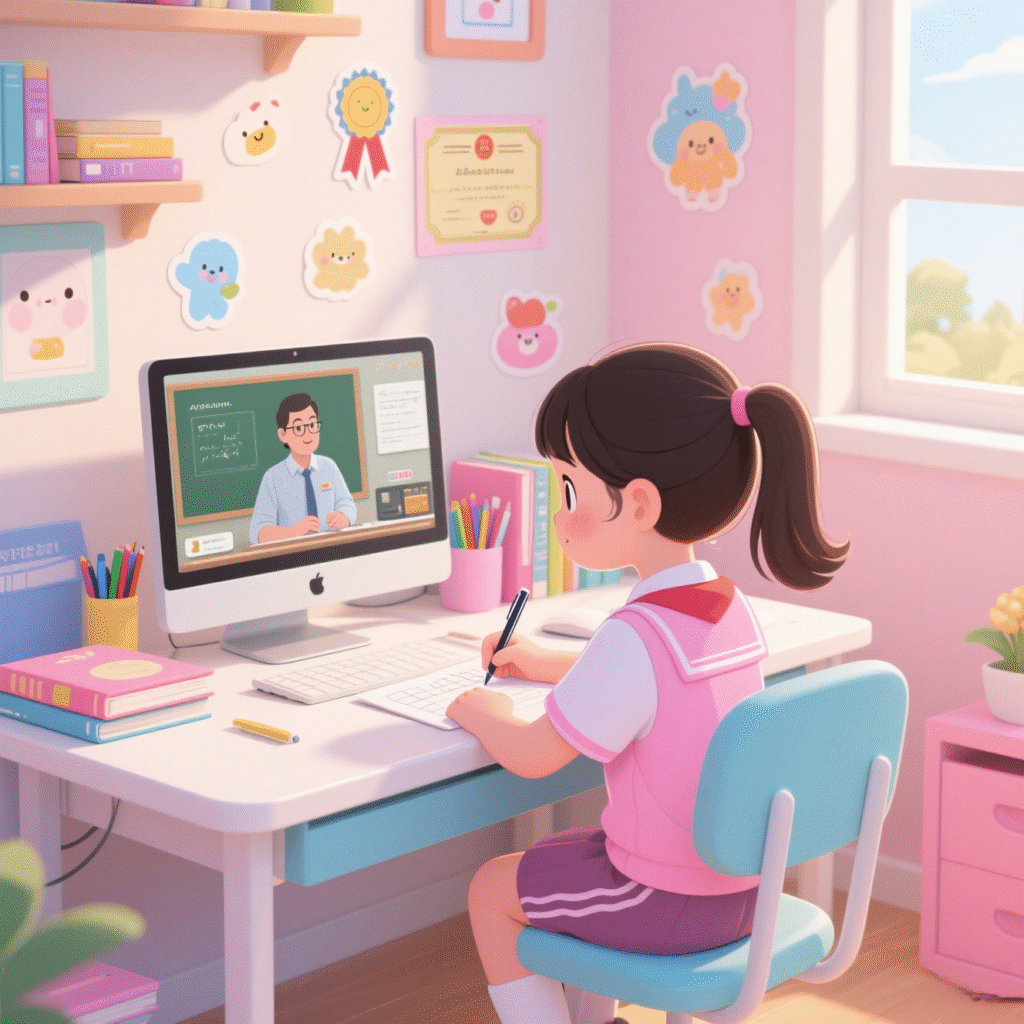
對於華裔孩子的媽媽而言,及早給孩子報名中文教學是非常有必要的。Sino-bus線上中文課的出現,給遠在國外的美國移民媽媽及其它國家的移民媽媽的教育帶來新的轉機。

因為在Sino-bus線上中文課教學中,老師會利用場景化教學及遊戲場景話教學在線一對一幫助華裔孩子解決日常中文學習過程中乏味、枯燥等問題。很多華裔媽媽通過陪伴孩子上Sino-bus線上中文課的時候發現,老師除了會結合孩子的實際定製專屬的教學計劃和大綱外,還在教學場景的過程中融入了中國元素,來讓華裔孩子更清晰的了解中國的歷史、中國的語言文字等。

這樣的教學方式除了可以讓華裔孩子能深入了解中國的文化外,也可以在場景化教學及遊戲互動階段培養中文學習的素養和興趣。

中文補習行情費用

Sino-bus中文課作為一款成熟的在線教育產品,除了給華裔孩子提供專業、有趣、高效的中文課程學習外,教學研發團隊還會結合華裔孩子的實際情況,定製專屬的中文在線課堂,在幫助他們培養雙語教學的同時,也能最大限度的説明孩子提升他們的中文交流能力。

面向未來,Sino-bus 除了在中文補習行情費用中佔優勢,而且在線中文課會作為一款溫暖的品牌,幫助華裔媽媽們更好的將中國文化傳統習俗傳遞給自己的孩子,彌補華人孩子常年在國外造成的母語空缺。

Mobilize the enthusiasm of Singaporean children’s Chinese reading and writing thinking abilities

Recently, many parents have been asking questions about Singaporean children’s Chinese reading and writing thinking abilities, including those who are still in the pinyin stage at a young age and those who are already proficient in literacy and want to advance to the writing stage.

Chinese, as our mother tongue, has a long history and profound cultural heritage. For me, learning Chinese is not only about its inherent beauty, but also about taking us to explore the vast ocean of knowledge.


Regardless of any subject, to learn it well, one must first understand the underlying logic of learning, and Chinese is no exception, which will not be affected no matter how the environment changes.

Singaporean children's Chinese reading and writing thinking abilities relies

As long as we fully understand the laws of learning and flexibly allocate learning resources and tools, even the most difficult knowledge can be simplified and easily mastered.


Which child doesn’t read Tang poetry? Regardless of whether parents are paying attention or not, kindergartens will more or less lead their children to learn Tang poetry for recitation.

But for children, the enlightenment of Chinese language, more important than these ancient classics and cultures, lies in the enlightenment of logic and language. Sometimes a child’s ability to express themselves is not just a matter of language, but rather the establishment of logic.


So the most important field to establish logic through language is the family. It is not an exaggeration to say that logical thinking lags behind and other subjects are not well studied, which is why.

So, when we say that big Chinese is important, it’s not that a certain knowledge point is important, but that the logical system established by language to understand and express the world is very important.


It is interesting that although I have done a lot of research on the enlightenment of Chinese language, what children spend time on in their daily lives is actually English, which seems to take the most time.


Why does this phenomenon occur? Saying that Chinese is the most important, but also focusing on English?


In fact, the enlightenment of Chinese language in the early days did not require strict planning of time and form, and could be fully integrated with daily living. There’s no need to say: Baby, let’s start learning Chinese now and then start studying seriously.


Every chat, every discussion of problems, and every parent-child reading together are all the gradual steps of Chinese enlightenment. Ensuring the quality of these times can help children establish a good foundation for communication. This is also why I say that Chinese enlightenment is the most important, but it is not limited to form, and daily life can be permeated with every detail.


As a foreign language, English learning requires dedicated time to learn and practice. Of course, this is because we need to learn a craft and specialize in learning English, while the infiltration of our mother tongue is more important, and the perception of daily details is more important.


Although the language development order of each child is not so balanced, with some occurring first and then, by the age of seven or eight, the difference in children’s language expression ability is not due to innate development.


At the age of seven or eight, when a child enters school, the entire learning becomes systematic and the social proportion greatly increases. At this time, language expression ability is actually a manifestation of the results of enlightenment.


We shouldn’t always force our children to read and memorize, and don’t always wonder, “Why do we do the teacher’s reading clock in homework on time every day, and why do children’s language expression skills still not meet expectations?” Even parents instinctively face such problems by enrolling in another eloquence class for training.

Singaporean children's Chinese reading and writing thinking abilities relies

The improvement of Singaporean children’s Chinese reading and writing thinking abilities relies on the use of real environments to stimulate energy, which means that language is alive. Reading only textbooks and only listening to classes makes it difficult for children to improve without extensive access and habits.


Can we recall the time we spend with our children every day? Have we consciously asked our children to tell a complete story, talk about interesting things, or tell us a joke we saw? Have you discussed any issues and expressed different perspectives with him?

The enlightenment of Chinese language is most closely related to our lives. Let’s think about it, every time we take our children to the park to observe animals and plants, every time we have family gatherings due to holidays, and every time we travel, we actually integrate our traditional culture.

If Chinese language learning is isolated and treated as a discipline or a technology, it is actually impossible to learn the essence and appreciate the beauty of this culture.


So, for Singaporean children’s Chinese reading and writing thinking abilities, the role of two extracurricular classes every Monday is limited, and what extracurricular classes can do is completely achievable in daily families.

As long as you persist, the effect will definitely not be bad.

Pay attention to the importance of Singaporean children’s Chinese eloquence

Recently, the Ministry of Education has issued an article to further promote the cultivation of Singaporean children’s Chinese eloquence and expression skills!

Nowadays, parents are increasingly paying attention to the cultivation of their children’s comprehensive qualities, whether it is their logical thinking training, language communication ability training, or aesthetic cultivation, covering all aspects.

The cultivation of this aspect is not only about cultivating children’s basic language communication skills, but now the Ministry of Education also attaches great importance to the cultivation of students’ oral expression skills.


The official letter mentioned that the Chinese language curriculum standards clearly define the training objectives and course content for students’ oral communication skills.

Singaporean children's Chinese eloquence

The “Chinese Language Curriculum Standards for Compulsory Education (2011 Edition)” specifically points out the training objectives of oral communication: “to have the basic ability of daily oral communication, learn to listen, express, and communicate, and preliminarily learn to use oral language for civilized interpersonal and social communication.”

In addition, a “Oral Communication” section is set up in the objectives and content of each stage of compulsory education, clarifying the teaching objectives and content of each stage.


From this, it can be seen that the development of children’s language eloquence ability is no longer limited to “extracurricular interest classes”. It has been planned to be included in compulsory education Chinese textbooks.

“In addition to being able to write, you also need to be able to speak” has become a trend for future students to gradually develop.


In addition to the official instructions from the Ministry of Education, parents can also find that “language communication” has become an important element that can gradually affect their children’s “personality”, “learning ability”, and “thinking” in their daily lives.

The “academic bully” has become a stereotype of being silent and engrossed in reading. Nowadays, which child is not proficient in speaking, writing, and martial arts, and pen skills are no longer a single criterion for measuring a child’s excellence.


So how to take a quick step and help children gradually master language expression skills?

One important aspect of Singaporean children’s Chinese eloquence is the accumulation and application of vocabulary. Through active communication with children, teachers enable them to continuously accumulate vocabulary. The accumulation of vocabulary directly affects their oral expression ability and is an important factor reflecting their expression ability.

Education experts often say, “Language is the outer shell of thinking. A person who is capable of speaking is generally intelligent and quick thinking. The training of eloquence and thinking is mutually reinforcing. To make oneself smarter, one should train one’s oral expression skills more.


Eloquence and writing ability can be mutually transformed, and a person who is truly good at expressing themselves is a good writer by recording their speeches. One of the principles of composition training is that speaking of writing is the foundation of being able to write.

Singaporean children's Chinese eloquence

But some students are good at writing, and their articles are smooth and fluent, but when spoken with restraint, this requires training. Writing first and then speaking is also a way to practice eloquence. Writing an outline and clarifying ideas is generally a preparation for oral communication.


When practicing eloquence, read more books and news to increase your knowledge reserve. It has to be said that reading more literary works has a great impact on people’s thinking, and it not only affects children’s writing level, but also their language expression ability.


The level of language can determine others’ perception of your cultural and ideological level. You don’t have to read books like doing Chinese reading exercises, just read more. There are also various encyclopedia knowledge, current political news, historical events, and so on, which are purely to increase the “dry goods” that children can throw out when speaking!


Only in practice can true knowledge be revealed. Similarly, in addition to language learning in textbooks and classrooms, it is important to put it into action in real life in order to diversify and enhance children’s ability to apply their eloquence.

If we cannot showcase and train children’s learning outcomes through a platform that only speaks without practicing fake techniques, the final presentation effect will definitely not be as good as that of children with rich language practice experience.


How to find these practical opportunities? Generally speaking, there are many good practical platforms for practicing language structures on the market to hone children’s courage and language abilities.

For example, the annual “Radio and Television Cup” competition held by Radio and Television Education, as well as recitations and hosting competition activities of all sizes, can meet children’s requirements for stage practice.

And the upcoming Chongqing Children’s Spring Festival Gala, which is about to be rehearsed, is a professional and rare opportunity to showcase.

I believe that all parents have understood the important role of cultivating Singaporean children’s Chinese eloquence in their daily lives!

I hope that in the process of oral communication, children can use accurate, appropriate, vivid, clever, and effective oral expression strategies to achieve specific communication goals and achieve satisfactory communication results. This is the art and skill of oral expression!


Interested parents can contact me~

Creative Chinese Writing for Singaporean Children

Why do children still have “nothing to write” when they memorize model essays every day? This worrying problem is a major concern for both teachers and parents. In response, Singapore’s top teacher, Teacher Zhang, proposed creative Chinese writing for Singaporean children.

creative Chinese writing for  Singaporean children

In order to fundamentally stimulate students’ inner drive for writing, it is advisable to try using the vivid and living “model text” – movies.


Writing Encounter Movies not only conforms to children’s internal growth patterns and closely aligns with their focus, but also more intuitively interprets the layout and writing techniques of “model essays”. The most important thing is that both teachers and parents can obtain the “key” to awaken children’s writing from it.


Due to children’s lack of life experience and limited access to direct materials; Moreover, they are not good at observation and have difficulty obtaining indirect materials, resulting in a shortage of materials and improper expression in current writing teaching.


Therefore, for children with monotonous daily life and insufficient social experience, capturing materials from movies with a wide range of themes to make up for the lack of life experience can be a twice the result with half the effort.


Movies open up children’s writing horizons – to understand knowledge in different fields, experience different life experiences, experience different emotional experiences, and freely write about the situation, feelings, and thoughts.


Children in primary school mainly learn through their senses, using their mouth, ears, eyes, nose, and body to feel, recognize, and discover the world.


And movies can intuitively simulate a perceptible world. Excellent film works often have a huge impact on people’s spiritual world, and can even affect a generation.


Movies enter childhood, allowing children to “digest and absorb” these classics into their own spiritual bloodline in the fantasy world of light and shadow. At the same time, children’s spiritual growth can be nurtured through writing.


A child who has been immersed in excellent movies for a long time will not have poor writing skills.

If a movie wants to attract attention and love from others, it is bound to be an innovative model in certain aspects. For example, unexpected and reasonable endings, creative compositions, harmonious and wonderful soundtracks.


These new ideas are subtly passed down to children, allowing them to explore unique expressions and forge innovative ways of thinking.


Looking at creative Chinese writing for Singaporean children, we still aim to pursue “high intention, precise selection of materials, clever structure, and beautiful language” as our writing goals, emphasizing the production and expression skills of articles, but neglecting the cultivation of communication skills in writing and students’ language communication abilities.


By comparison, writing teaching in many other countries is not only aimed at enabling students to master various writing skills and forms, but also at educating students to recognize the communicative value and function of writing.


The concept of creative writing is to closely connect writing and life, so that every writer deeply feels that writing cannot do without life, and writing also enriches our lives.
How to improve children’s writing ability?

creative Chinese writing for  Singaporean children

Interest is the best teacher, and the first step is to cultivate children’s interest in writing, so that they can work with half the effort.


Often telling children meaningful fairy tales or simple and easy to understand stories allows them to unconsciously be influenced by culture, thereby increasing their cultural temperament.


Encourage children to develop a good habit of reading books, persisting in reading for a while every day without demanding too much. When tired of reading, take a break and not be too demanding.


Developing the habit of keeping a diary for children can improve their writing skills to a certain extent and accumulate a lot of life materials for writing.


Give more positive and objective evaluations of what children write, improve their self-confidence, and stimulate their writing enthusiasm.


Taking creative Chinese writing for Singaporean children, as an example, the development of creative writing is not limited to the curriculum of higher education institutions.

Through the joint efforts of primary and secondary education, general education, professional teaching, and social training, its development has formed a relatively mature system and is more comprehensive. The sinicization of creative writing is being solidly promoted.

Singaporean children’s Chinese oral expression ability

The ability of Singaporean children’s Chinese oral expression ability is an aspect that parents should focus on cultivating. Having good language expression skills can benefit children for a lifetime. Although language plays a significant role in interpersonal relationships, not everyone possesses good language expression skills.


Language is a tool that can be proficiently used through acquired training. Learning to speak and speak is one of the key skills for children’s future career success. The training of language expression ability can be advanced to the early childhood education period and started in family education, rather than relying solely on written teaching from teachers.


Language education includes four aspects: listening, expression, early reading, and pre writing preparation.

It creates a free and relaxed language communication environment for young children, develops their language understanding and expression abilities, cultivates their interest in reading and writing, and helps them become familiar with, understand, and learn Mandarin.

Singaporean children's Chinese oral expression ability

Early childhood is the optimal period for children’s oral language development. Language education not only plays an important role in children’s lifelong oral expression ability, but also has a positive impact on their cognitive, social, and emotional development.

Parents can help their children improve their expression skills in the following ways:
Try to find topics that your child is interested in to discuss with them, and do not deviate from their cognitive range so that they can “speak” out.

It is rumored that there was once a working elementary school teacher who, during his fifth grade essay class, asked his classmates to write the topic ‘If I were the Manager’, but none of the children’s writings were satisfactory.

Firstly, children have no emotional understanding of the role of “manager”, which is like asking someone who has not seen a horse to draw a horse.

From this, it can be seen that in order for children to learn oral expression, it is necessary to stimulate their enthusiasm, make them feel that they have something to say, and fully activate their thinking, because language always follows the movement of thinking.


This website often reports on which left behind children have autism, largely due to the lack of communication with their parents. Many parents do not know that the foundation of their children’s language learning is imitation, which is the so-called “learning by example”.

Therefore, parents should first talk to their children more and familiarize them with the language in order to maintain a high level of sensitivity to language. This is the most basic step in exercising children’s oral expression ability. Everyone has heard a lot about the story of the wolf child, and it is also true that the environment affects a person’s growth.

Singaporean children's Chinese oral expression ability

The ability of Singaporean children’s Chinese oral expression ability is developed through practice. To cultivate children’s oral skills, it is necessary to encourage them to speak and practice more.

The term ‘practice more’ here mainly refers to giving children more opportunities to tell their own experiences, including retelling stories they have heard, telling book content, creating stories, and talking to others in daily life.

Children should be encouraged to creatively organize language based on their own understanding and mastery of vocabulary and grammar. The current practice of parent-child reading in many kindergartens is also based on this starting point. We always tell stories to our children, and we should also listen to them reading stories to us.


This is very important. When a child comes up with an understanding of something, regardless of whether the child’s ideas are correct or not, parents should not rush to judge and correct the outcome.

Being too hasty can easily dampen a child’s motivation, as it is the child expressing their own will. It is important for them to “speak up” and not care if they are “right” or not. Afterwards, find appropriate opportunities to guide and correct.


The improvement of Singaporean children’s Chinese oral expression ability is a cumulative result.

Singaporean Children’s Playful Chinese Teaching

Language learning is dull and uninteresting, especially for children in their growth and development stages. This requires adding fresh and active elements to language learning to attract children’s attention. Singaporean children’s playful Chinese teaching can increase their interest in learning.

In the classroom, teachers are planners of communication training, directors of “Chinese language programs”, and organizers of game activities.

Real emotional communication between teachers and students can promote the formation and development of classroom communication training, allowing students to engage in enjoyable and informative Chinese language training in a natural and comfortable language environment.

The importance of Chinese tutoring for Singapore.In this Chinese language atmosphere, students will be very willing to respond to the questions raised by the teacher, which is conducive to the development of teaching activities.


In most classes, students’ Chinese proficiency is not very neat, and there are always some students in the class whose Chinese proficiency is higher than others. These people are the “little teachers” and “little translators” in the class, and they are good helpers for the teacher. When they help others, their Chinese proficiency is also improved.


Teachers should play these roles by grouping them into groups and selecting one student from each group to serve as the ‘little teacher’ to assist slightly weaker students. This can not only achieve the goal of promoting learning, but also alleviate the tension and shyness of slightly weaker students by practicing on a small scale, and each has its own benefits.


A formal teaching environment may make students feel nervous or constrained, especially for children from English speaking countries. They are relatively free to talk, walk, or eat freely in their own classrooms, but these are not allowed in China.

We can try to discuss daily topics such as weather and dates before class, creating a relaxed chat style teaching atmosphere. This can not only reduce the pressure brought by the formal classroom atmosphere, but also prevent students from getting distracted.

During the teaching process, it can help students maintain a good overall level of excitement.

Pictures and cards are both good tools for students to recognize characters. In the early stage of Singaporean children’s playful Chinese teaching, teachers can apply life pictures, animal pictures, plant pictures, etc. to classroom teaching. Colors and pictures can help students more effectively remember the Chinese characters next to the pictures. In the next stage, the format of card games can be changed.


I once tried a game called “Sharp eyes”, which divided students into two groups: A and B. The cards with new words were left in front of the students for one to two seconds, allowing them to quickly recognize the new words on the cards through instant memory. The fast group received a star as a reward, achieving good results. This method is also suitable for learning and training new sentence patterns.


Children often show a strong interest in role-playing in the classroom. Performing role plays using new words and sentence structures learned in the text to recreate certain scenes in the text or life is beneficial for cultivating children’s language communication skills.


For example, when learning the content of “payment”, I designed a scene of shopping in a store, where students were asked to use the newly learned words in this lesson to recreate the characters. The effect was surprisingly good.

The students not only used the words “change” and “package” learned in the text, but also used many words they had heard in daily life.

The repeated practice in Singaporean children’s playful Chinese teaching is the main way for children to learn and master a language. Practicing in games not only avoids students’ boredom, but also stimulates their interests. Games are generally divided into the following categories:


Card class
You can read some new word cards one by one for students to recognize, and after one or two rounds, draw a card from them and buckle it on the table for the third round of recognition, allowing students to quickly reflect on what word the missing card is. This game tests students’ memory ability and can also effectively concentrate their attention.

Action class
When playing the game of ‘antonymous actions’, students perform the opposite actions according to the instructions given by the teacher. When the teacher says’ big ‘, the students draw a smaller circle with their hands. When the teacher says’ cry’, the students must make a smile.


In the game of “matching numbers and taking seats”, the teacher prepares two sets of identical cards with words or phrases written on them, and sends one set to the students. The students hold their own cards and stand together. The teacher arranges the other set of cards in a disordered order, and the students find their rightful position according to the arranged order.


Performance category
One is to perform dialogues or content in the text to help students understand the content, and the other is to train students in verbal communication. These games can exercise students’ communication skills.

For example, simulating real-life scenarios such as shopping, visiting hospitals for medical treatment, and conducting interviews with journalists, these practice students’ language communication skills.

During the game, students can not only gain the satisfaction of “growth”, but also receive the benefits of improving their language organization, expression, and listening and speaking abilities.


Memory class
It can train students’ instantaneous memory ability and help transform short-term memory into long-term memory. Teachers can write multiple words on the blackboard and ask everyone to remember them in a short period of time.


Students are divided into two groups, each group selects a team member. The first group member faces everyone with their back to the blackboard, while the second group member erases one of the words.

The first group member turns to look at the blackboard, says the erased word, and makes a sentence using that word. The teacher will fill in the erased words and play the next round of the game.

新加坡幼儿中文幼儿园

众所周知,现如今在低龄留学的大趋势下,越来越多的父母们为了孩子上新加坡幼儿中文幼儿园都早早做起了打算。  

新加坡幼儿园共分三种类型:公立幼儿园、私立幼儿园、国际中文幼儿园。  

新加坡幼儿中文幼儿园

公立&私立幼儿园  

新加坡有两所大型公立幼儿园,PAP和MFS,幼儿园阶段可直接入读。幼儿园入学不需要参加考试,2至5岁的孩子可以直接申请,即使是家长不在新加坡工作也没有新加坡身份的小朋友也可以来新加坡读幼儿园。  

相较于国际幼儿园和私立幼儿园一般学额充足,公立幼儿园学额比较紧缺,需要申请;3岁之后申请公立幼儿园,学生准证获批的可能性更大。  

新加坡除了公立幼儿园,还有大批优秀的私立幼儿园,入学同样不需要参加考试,2至5岁的孩子可以直接申请。私立幼儿园教学质量同样能够得到保障,同时相较于公立幼儿园,学位更加充裕。  

国际中文学校幼儿园  

国际学校,从幼儿园到高中,各个学段都可以直接插班入读,只要学校有学额,符合年龄段的学生都可以办理入学(年纪过大的学生有语言要求,一般通过面试或者British council的语言测试)。   国际学校的学额,相对公立学校的“一位难求”,一般都比较充足。  

新加坡幼儿中文幼儿园就读,孩子接受英联邦教育体系下的全英文教育,但不放弃母语,特别是中文,是孩子们的必修课。  

新加坡幼儿中文幼儿园

幼儿园入学零条件!  

(1)3岁至5岁孩子可直接申请新加坡幼儿园。  

(2)无需政府入学考试,无英文要求,直接入学,享受和新加坡学生同等的待遇。   陪读政策   新加坡是世界上为数不多的允许低龄留学和陪读的国家(特别是母亲陪读政策),年龄在6周岁至16周岁的孩子,母亲或直系女性亲属都可以申请前往陪读:  

(1)新加坡允许陪读,但条件为必须是16岁以下孩子的母系亲属;

(2)新加坡允许陪读母亲工作,陪读母亲在学生入学一年后,就可以向新加坡劳工部申请特殊的工作准许证,在该国就业。  

Tips:新加坡政府非常重视父母对孩子教育的参与和沟通,许多教学活动需要父母与孩子互动,因此,对持陪读签证的母亲(奶奶)来说,在新加坡的第一年是不允许打工的。申请前,父母必须做的事是尽量选择离自己家近的幼儿园。虽然新加坡不大,否则就算有校车,要跨越一个坡岛去幼儿园,对宝宝和家长来说都是一种折磨。

很多新加坡幼儿中文幼儿园都提供中文和英文的双语教学,也有全英文或全中文的。一些私立幼儿园或国际幼儿园还提供如德语、日语等其他语言的教育。如果父母都要工作,幼儿园的上课时间就很重要。有半日制也有全日制的幼儿园,有些还提供晚间托管服务。

The Current Situation and Suggestions of Chinese Developmental Language Disorders in Young Children

This article will elaborate on current situation and suggestions of Chinese developmental language disorders in young children.

According to data released by the National Bureau of Statistics in 2021, the current population of children aged 0-14 in China exceeds 250 million. The development of language ability is a lifelong task for humans, and the critical period for this ability development is in childhood.

China started relatively late in the research field of children’s language development, especially their listening and speaking abilities, and the scientific research efforts are correspondingly insufficient.

Chinese developmental language disorders in young children

In the age range of 0-8 years old, there are multiple milestone nodes, marking a new stage in children’s language ability. Children’s language ability mainly involves the following aspects: phonetics, grammar, and pragmatics.


The first milestone is when children say their first meaningful word. This milestone usually occurs around 12 months after the child is born. In the pre language stage prior to this, the pragmatic abilities of several months old infants emerged, demonstrating the ability to interact with parents or primary caregivers and respond to certain commands.

At around 6 months, parents can observe the sprouting of a child’s speech ability, and at this point, the baby begins to babble and make sounds similar to speech, ready to truly speak the first word.


The second milestone roughly occurs between the ages of 1 and a half to 2, when the child has mastered approximately 50-100 vocabulary words and learned to put the two words together, such as “Mom hugging”.

At this stage, children express richer and more diverse meanings through language, and are able to convey communicative intentions such as questions, protests, and requests.
Around the age of 3, children’s vocabulary development enters an “explosive period”, with their expressive vocabulary increasing from hundreds to thousands. Around the age of 5, Chinese speaking children can speak approximately 2000-2500 words.


At the age of 3-5, children are able to master the vast majority of Chinese initials, vowels, and tones, with continuous improvement in speech clarity. At the same time, their grammar abilities are rapidly developing. They speak longer sentences with more complete and complex syntactic structures.


Children aged 4-5 are able to utter complete sentences containing 7-10 words, produce quantitative structures, master sentence structures such as negative, passive, interrogative, and relative clauses, and frequently use “then” to connect sentences.

Children’s narrative ability usually begins to develop at this stage, demonstrating the ability to narrate their experiences in chronological order, telling and retelling simple stories.


Developmental language disorder refers to a significant obstacle in language understanding and expression, with some children experiencing only one aspect of language understanding or expression, while others experiencing both. Children may have obstacles in syntax, vocabulary, semantics, and pragmatics.

The specific manifestations vary from person to person, and common manifestations include small vocabulary, short average sentence length, inability to understand instructions given by adults, etc.

Some studies have shown that compared to normal children, Chinese developmental language disorders in young children in early childhood have a higher unemployment rate during their growth.

Chinese developmental language disorders in young children

The above scientific research results indicate that delayed language development in children should be given early attention.

In terms of talent cultivation, the “14th Five Year Plan” emphasizes the importance of cultivating a special education teacher team and proposes to “strengthen the construction of special education teacher teams”.

In addition to increasing efforts to cultivate full-time teachers, the action plan also requires “organizing and conducting training for all principals and teachers of special education schools and regular schools, and incorporating integrated education into the compulsory content of continuing education for regular school teachers”.


On this basis, we suggest that in the next stage of the plan, the important position of language ability development should be further highlighted: firstly, in terms of talent cultivation, the professional fields of special education teachers should be refined, and professional literacy should be improved.

Courses such as “Linguistics” and “Language Intervention” should be included in the training curriculum of special education teachers.


Secondly, in terms of school curriculum, promote the establishment of specialized language proficiency enhancement courses in special education schools and regular schools.


Thirdly, it is recommended that relevant departments take the lead in promoting cooperation between university researchers conducting research on language barriers and interventions, as well as special education schools, classrooms, and frontline teachers.

By combining theory with practice, we can improve the quality of language intervention courses while continuously improving the professional level of special education.

The developmental language barrier of Chinese developmental language disorders in young children deserves our high attention. At present, China has begun to promote the establishment of job standards for “rehabilitation therapists”.

On this basis, we suggest that: firstly, the government actively promotes the standardization of professional standards for rehabilitation practitioners and advocates for professional refinement.


Secondly, policies should be introduced to develop language and speech therapy majors, referring to mature training processes and plans (such as undergraduate and master’s education at the Hong Kong Polytechnic University), and improving professional talent training mechanisms.


Finally, at the policy level, supporting the talent introduction of speech and language therapists can not only solve the current “urgent need” for professional practitioners, but also provide assistance for the subsequent talent cultivation.

Does learning Chinese treat children with depression?

In recent years, the incidence of depression has gradually decreased at a younger age. According to statistics, about 1% to 2% of children and 4% to 7% of adolescents are troubled by depression to varying degrees, and more than half of the first depressive episodes occur during adolescence. According to survey statistics, the possibility of learning Chinese to treat depression in children has greatly increased.

Learning Chinese to treat depression in children

Children and adolescence are critical periods of life growth and development. At this stage, parents are particularly cautious about their children’s use of medication, especially antipsychotic drugs, which has led to widespread use of psychological therapy to address the psychological and behavioral problems of adolescents.


Cognitive behavioral therapy
Children and adolescents with depression generally have problems such as negative cognition, unreasonable beliefs, low self-esteem, inferiority complex, aversion to learning, and negative cognition. Cognitive behavioral therapy (CBT) can effectively improve these aspects and achieve good intervention effects.


The main principle of CBT is that cognition serves as a mediator between emotional and behavioral responses. By using treatment strategies such as cognitive reconstruction, improving coping styles, behavioral activation, and social skill training to change inappropriate cognitive styles, emotional and behavioral disorders can be correspondingly improved.


Interpersonal psychotherapy
The theory of interpersonal psychotherapy (IPT) assumes that the occurrence and development of various emotional disorders, including depression, are influenced by interpersonal relationships.

By improving the ability and skills to interact with others, handling and resolving interpersonal relationships and crises, it can improve the social function of visitors and alleviate various emotional symptoms.


Interpersonal relationship disorders are common problems in the growth process of children and adolescents, especially those with depression, such as separation from parents, pressure to develop intimate relationships with peers, beginning to experience the loss of family and friends, and interpersonal role conflicts.


Family therapy
Family psychotherapy is a psychotherapy method that involves at least two or more family members participating together, with the aim of restoring healthy family social functions.

Family therapy focuses on the interactive relationships between family members, without paying attention to the psychological structure and state analysis of individual family members; Using a systematic approach to explain the behavior and problems of individual members; To change an individual’s pathological behavior, it is necessary to establish a change in the overall interaction mode of the family.


Family therapy that focuses on children and adolescents’ issues mainly focuses on improving family relationships and alleviating family conflicts; Enhance family understanding of children’s emotional and behavioral issues; Promote effective communication between parents and children; Transforming the parenting style of parents towards their children.

Language is a tool for human communication and a weapon for thinking. Learning Chinese to treat depression in children is also very effectiviy. Individuals rely on language to receive education and grow; Individuals use language to exchange ideas and understand each other. The importance of language education is mainly reflected in several aspects:

Learning Chinese to treat depression in children

Human individuals must understand and communicate with each other through language
Good language communication skills will shorten the distance between individuals and other members of society. When a child is trained to use language accurately to communicate with their peers, parents, teachers, or others, they will be more easily accepted and have good social adaptability.


Language lays the foundation for intellectual development
It is also the foundation for learning other knowledge. The development of early language ability in young children is an important indicator of their intellectual development.

Language has a high degree of generality, and language education can exercise children’s cognitive abilities and help improve their learning abilities. When young children have a certain level of language ability, they can smoothly enter other fields of learning and achieve good learning outcomes.


Language is an essential element in the development of creativity
Early childhood language education helps to improve thinking and imagination abilities, and the development of thinking can promote the development of children’s logical thinking and language expression abilities.

The development of children’s thinking and language abilities is synchronous, and the process of children mastering language is also the process of developing abstract thinking abilities. When adults provide language education to young children, it can promote the development of their thinking activities towards multi-directionality, uniqueness, and adaptability.


Language is an essential factor in improving one’s personality
Through early language education, young children can learn how to receive information from others and express their intentions correctly. This good communication ability helps to develop interpersonal relationships and establish self-confidence.

By allowing young children to operate well-designed language learning aids, they can also cultivate their interest in learning, improve their initiative in learning, and increase their focus and continuity in learning.

These good learning habits have a significant impact on the development of learning Chinese to treat depression in children. It is very limited. No matter what game my baby and I play, I will observe their reduced attention.

Babies often interrupt the focus of their eyes and divert their attention. I will also do the same action to give him a few minutes to slow down, and then we will start practicing from scratch.